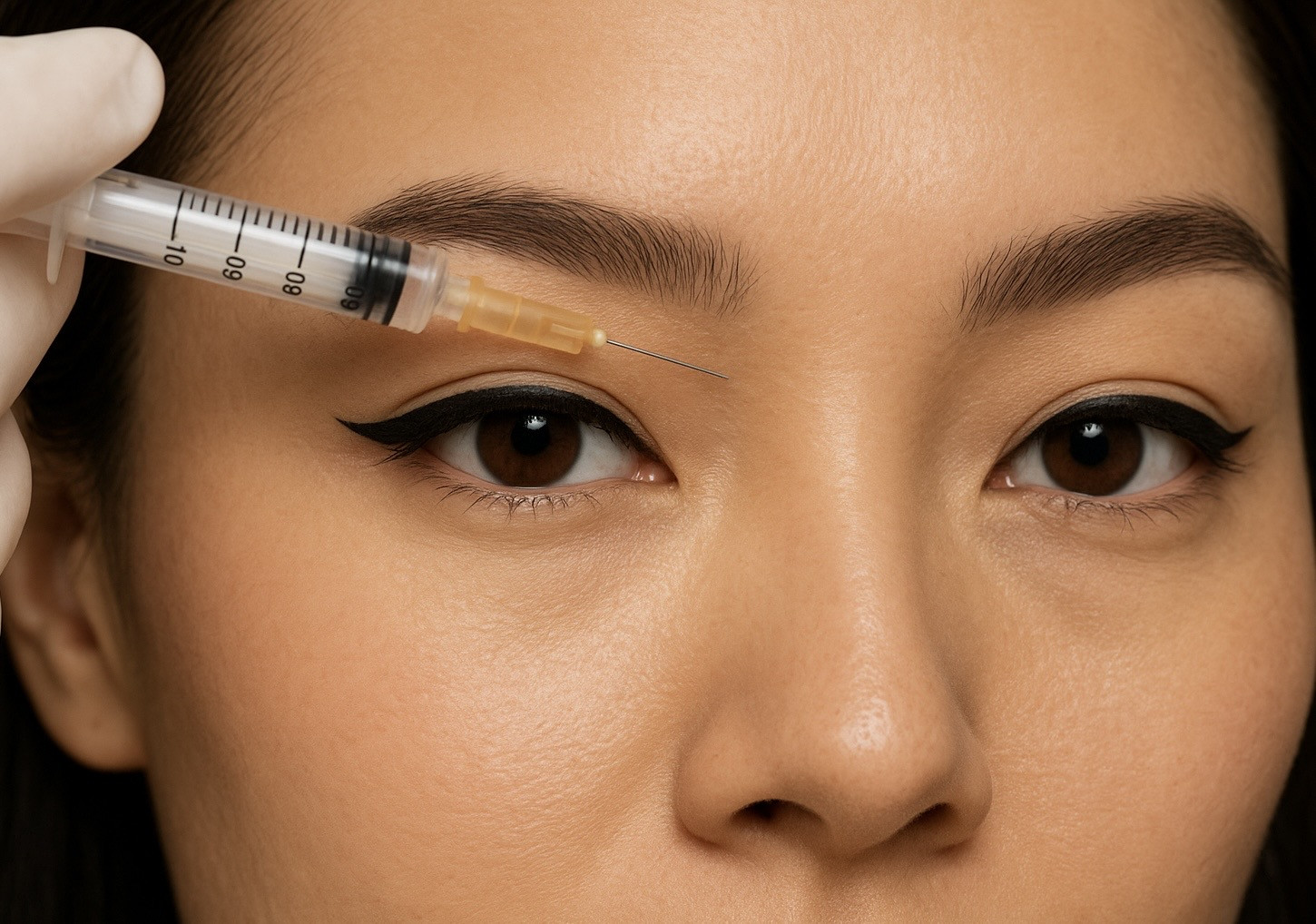
The “fox eye” or “cat eye” look relies on two structural changes:
Lateral brow elevation, and
A more elongated, upward lateral canthal tilt.
Botox can only achieve the first, and even that is modest, temporary, and highly dependent on each patient’s anatomy.
1. What Does the Evidence Show?
Clinical studies that actually measure brow elevation after botulinum toxin consistently show:
Average lateral brow lift: 1–3 mm (small but sometimes noticeable)
Duration of effect: 4–8 weeks
- Shorter than typical Botox longevity because the depressor muscles recruit early
Evidence base includes:
1- Carruthers & Carruthers brow dynamics studies
2- Kane et al. plastics literature on orbicularis oculi relaxation
3- Aesthetic Surgery Journal meta-analyses on toxin and brow elevation
4- AMWC/IMCAS consensus expert guidelines
5- Experienced injectors’ real-world outcome audits
No study measures “fox eyes” specifically, but the brow-elevation data reliably predicts how many patients will see a true change.
2. What Percentage of Patients Achieve a Visible Fox-Eye Effect?
A. Noticeable fox-eye lift:
➡️ 20–30%
Typically seen in patients with
thin, elastic skin, naturally higher brows, strong frontalis, weaker orbicularis, good lateral canthal support
These patients show the most obvious result.
B. Mild, subtle lift only:
➡️ 40–50%
They may achieve a 1–2 mm lift, but it does not translate into a dramatic fox-eye shape.
C. No meaningful lift:
➡️ 20–40%
More common in patients with low or flat brows, lateral brow ptosis, hooded eyelids, weaker frontalis, heavy skin or age-related changes
In these individuals, excessive Botox may even worsen brow heaviness.
3. Why Only a Small Percentage Achieve a True Fox-Eye With Botox?
Because Botox only weakens muscles—it cannot create structure.
Botox relaxes the orbicularis oculi (a depressor), but a fox-eye effect needs:lateral orbital tendon support, a higher lateral brow position, taut, lifted temporal skin, an upward-slanted palpebral fissure
Botox cannot tighten ligaments, reposition the canthus, or lift skin tension vectors.
4. Anatomy That Predicts Success vs. Failure
Good Responders (20–30%): thin skin strong frontalis, good ligament elasticity, minimal eyelid skin, naturally almond eyes
Poor Responders (20–40%):heavy or thick skin, pre-existing lateral brow ptosis, hooded eyelids, post-blepharoplasty changes, strong orbicularis needing higher doses
5. Comparison: Botox vs. Other Lifting Methods
Botox
Lift: 1–3 mm
Duration: 4–8 weeks
Visible fox-eye in 20–30%
Not reliable for dramatic reshaping
Threads
Lift: 2–5 mm
More immediate and more dramatic
Satisfaction: 50–70%
Lateral Brow Filler
Supportive lift
Best as an adjunct
Duration: 6–12 months
Surgical Options (brow lift / canthoplasty)
Most stable, longest-lasting
Only method that consistently produces a true fox-eye vector
Bottom Line
Botox can provide a small, temporary lateral brow lift, but only 20–30% of patients achieve a visible fox-eye change. For most people, the effect is subtle, and in some cases, it may not appear at all.
If someone wants a dramatic or long-lasting fox-eye shape, threads or surgical techniques are far more reliable.
Always consult with a qualified dermatologist for proper assessment and safe practice.
And with Cutiscity, expert dermatology guidance is always at your fingertips; get your consultation done in minutes.