Discover the science behind Dutasteride mesotherapy for hair loss: evidence, results, and side effects explained by dermatologists.
Hair loss is one of the most common concerns seen in dermatology practice; affecting both men and women at various ages. Among the newer interventions, Dutasteride mesotherapy has been gaining attention for its role in managing androgenetic alopecia. But does it really work? Let’s look at the evidence and reality behind this trending treatment.
What Is Dutasteride Mesotherapy?
Dutasteride is a 5-alpha reductase inhibitor, originally approved for benign prostatic hyperplasia. It blocks both Type I and Type II 5-alpha reductase enzymes, reducing the conversion of testosterone to dihydrotestosterone (DHT) the key hormone responsible for miniaturizing hair follicles.
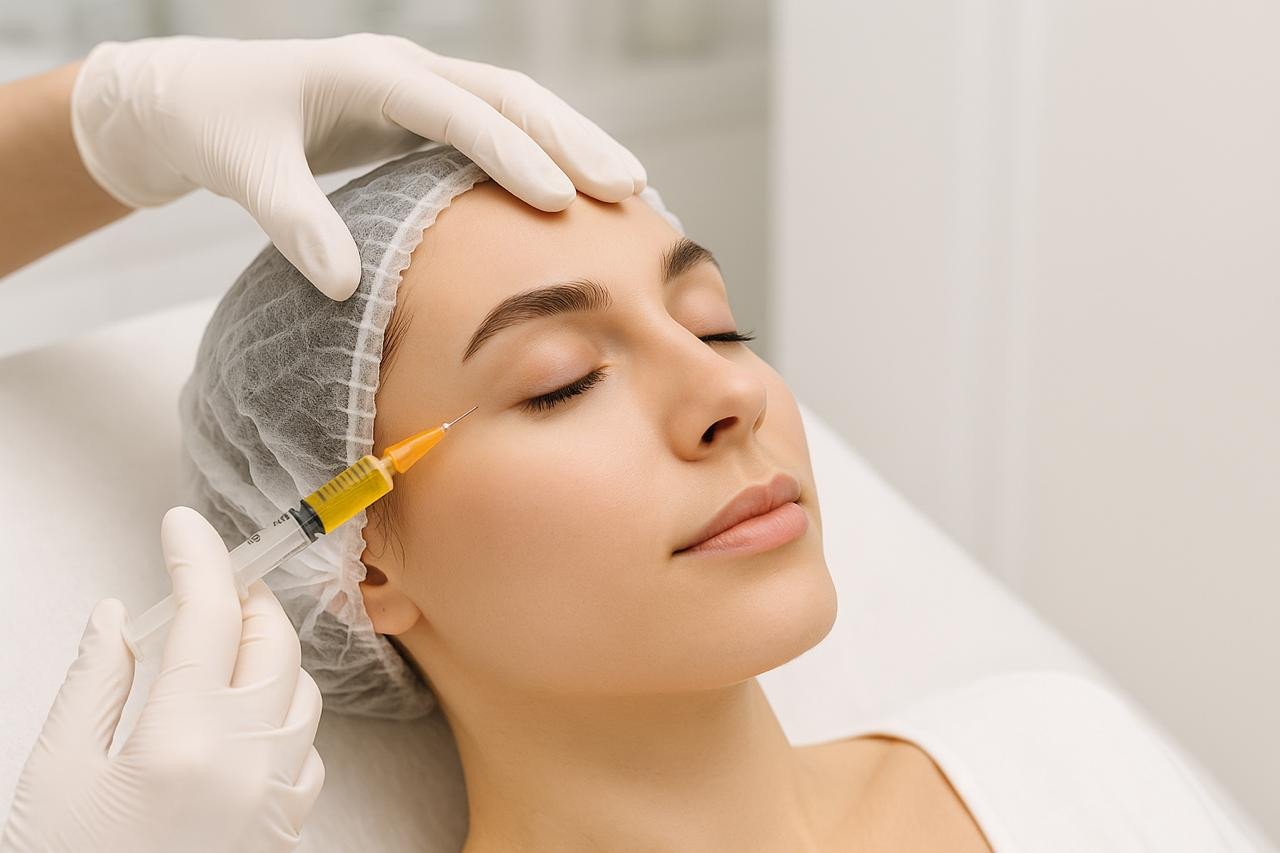
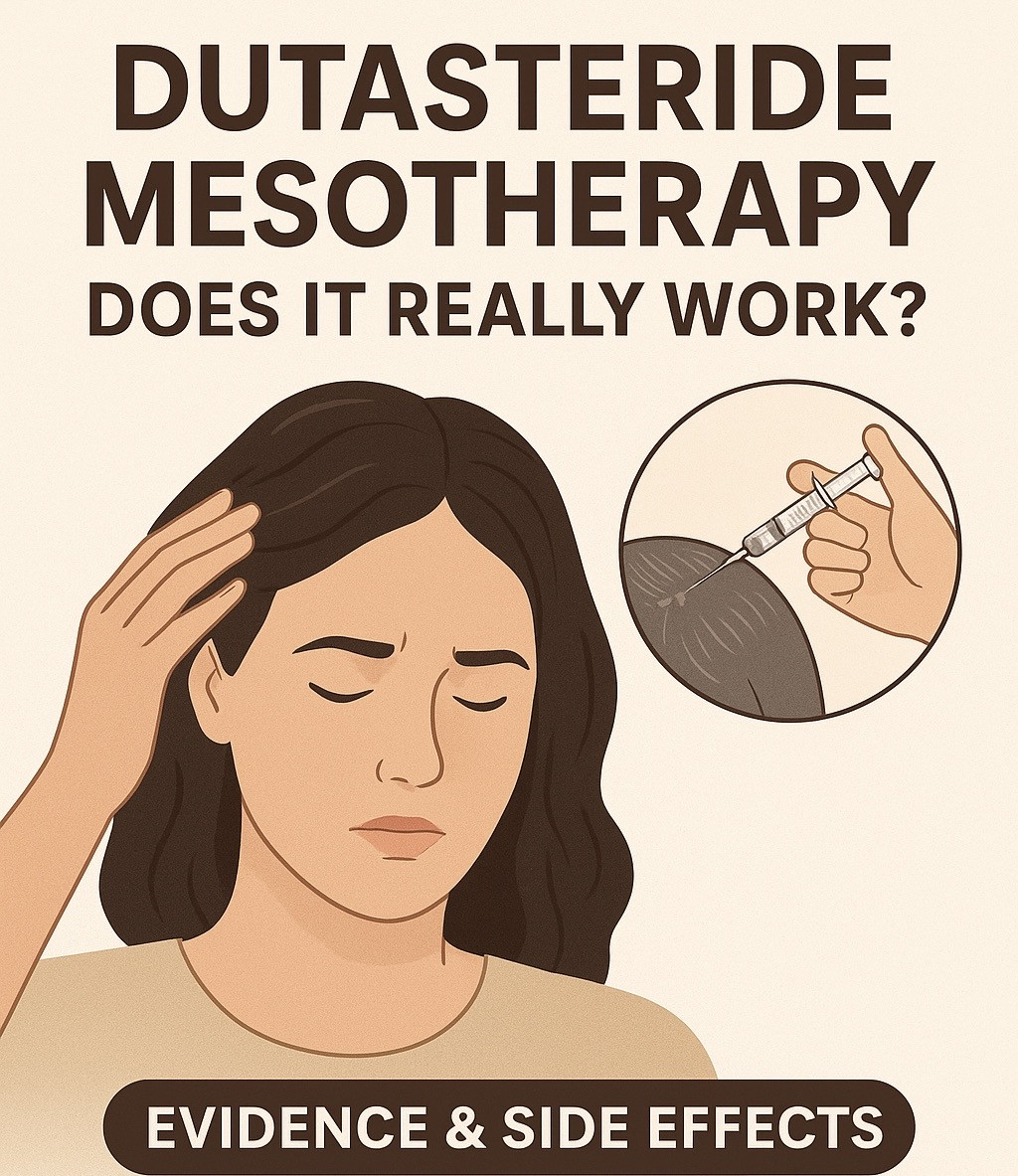
In mesotherapy, small doses of Dutasteride are injected directly into the scalp using micro-needles or a mesogun. The idea is to deliver the drug locally to hair follicles, minimizing systemic absorption and potential side effects compared to oral use.
What Does the Evidence Say?
Over the past few years, several studies and clinical reports have evaluated Dutasteride mesotherapy’s effectiveness:
- Randomized controlled trials (RCTs) have shown significant improvement in hair density and thickness compared to placebo or even topical minoxidil.
- A 2022 meta-analysis (Journal of Cosmetic Dermatology) found that intradermal Dutasteride (0.02–0.05 mg/session) administered every 2–4 weeks for 3–6 months led to noticeable hair regrowth in both male and female pattern hair loss.
- In male androgenetic alopecia, results are often superior to finasteride-based mesotherapy due to Dutasteride’s broader enzyme inhibition.
- In female pattern hair loss, the response is more variable, but clinical improvement has still been reported in many small-scale studies.
However, most studies are short-term and small in sample size, so while the evidence is promising, long-term safety and efficacy data remain limited.
Side Effects and Safety Profile
One of the key advantages of mesotherapy is the lower systemic exposure. Even so, some local and rare systemic side effects may occur:
Local reactions:
- Mild pain, redness, or swelling at injection sites
- Temporary shedding (“shock loss”) during the first few weeks
- Folliculitis or itching (uncommon)
Systemic effects (rare but possible if overused):
- Decreased libido or erectile dysfunction
- Gynecomastia
- Hormonal imbalance with prolonged use
Proper technique and conservative dosing (not exceeding 0.05 mg per session) minimize these risks significantly.
How Often and How Long?
Most protocols suggest:
- Initial phase: 1 session every 2–3 weeks for 3 months
- Maintenance: Once every 2–3 months thereafter
Visible improvement usually starts after 2–3 months, with best results around 6 months. Combining it with PRP, microneedling, or low-level laser therapy often enhances outcomes.
Key Takeaways
Dutasteride mesotherapy is an effective and safe adjunct for androgenetic alopecia; especially for patients intolerant to oral therapy.
Evidence supports its local action with minimal systemic absorption, though more robust trials are needed.
Always ensure treatment is done by a qualified dermatologist, with aseptic technique and appropriate dosing.
Combination therapies yield better and more sustained results.
In Summary
Dutasteride mesotherapy offers a targeted, evidence-backed approach for hair restoration, bridging the gap between topical treatments and oral medications. When performed under dermatologic supervision, it can be a game-changer in reversing hair thinning and restoring confidence. Should you require more information about dutasteride and other treatments for hair loss, book your appointment with a dermatologist now on CutisCity and discuss in detail.