How Psychological Stress Can Trigger Patchy Hair Loss
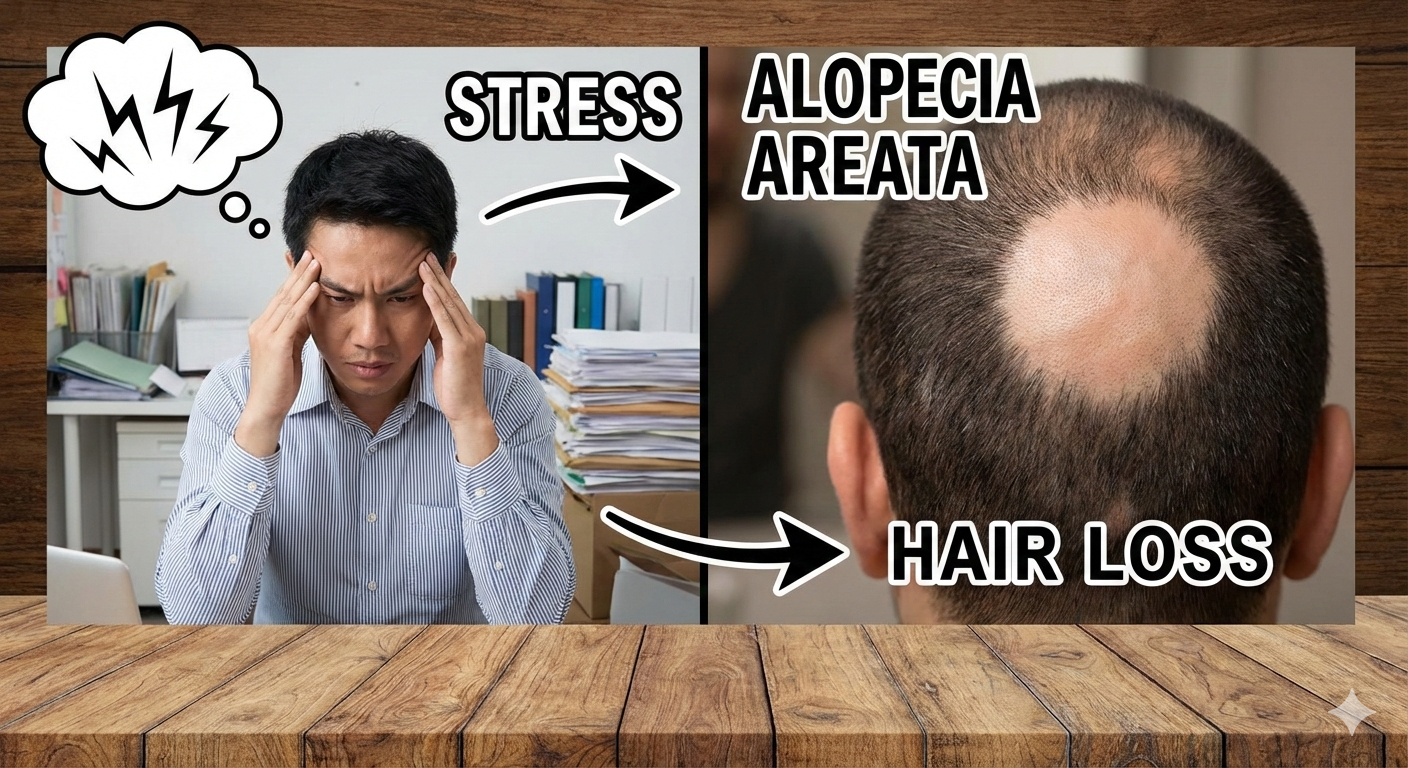
Alopecia areata is a common autoimmune condition that causes sudden patchy hair loss on the scalp or body. One of the most frequent questions patients ask is:
Can stress cause alopecia areata?
Scientific evidence shows that psychological stress does not directly create the disease in every person. However, stress can act as a powerful trigger or aggravating factor in genetically susceptible individuals.
Understanding the biology behind this link helps both patients and dermatologists manage flare ups more effectively.
What Is Alopecia Areata?
Alopecia areata is an autoimmune hair loss disorder in which immune cells attack the hair follicle. Normally, hair follicles are protected by a mechanism called immune privilege, meaning the immune system ignores them.
When this protection collapses, inflammatory cells target the follicle, leading to:
• Round or oval bald patches
• Sudden hair shedding
• Beard or eyebrow involvement in some cases
• Recurrent flare ups
How Stress Affects the Immune System and Hair Follicles
Psychological stress activates the brain’s stress response system, increasing production of:
• Corticotropin releasing hormone
• Cortisol
• Adrenocorticotropic hormone
• Neuropeptides such as substance P
These stress mediators directly interact with skin and hair follicle cells.
1. Neurogenic Inflammation Around Hair Follicles
Stress increases release of substance P from nerve endings in the skin. This activates mast cells and other immune cells surrounding the follicle.
As inflammation rises:
• Cytokines increase
• MHC class I expression becomes elevated
• The follicle becomes more visible to immune attack
This process contributes to immune privilege collapse, making autoimmune targeting more likely.
2. Disruption of the Hair Growth Cycle
Stress hormones such as cortisol and CRH can alter the hair cycle by:
• Shortening the anagen growth phase
• Promoting early transition to catagen
• Increasing follicular vulnerability
A stressed follicle may therefore be biologically weaker and more susceptible to immune mediated damage.
What Do Clinical Studies Show?
Research supports a strong association between stress and alopecia areata:
• Case control studies show patients with alopecia areata are significantly more likely to report recent stressful life events before onset.
• Stress is frequently reported before sudden patch formation or rapid progression.
• Psychological distress, anxiety, and depression are more common in patients with alopecia areata, creating a stress inflammation cycle.
However, not every patient with alopecia areata reports stress, and not everyone under stress develops hair loss. Stress is a trigger, not the sole cause.
Can Managing Stress Improve Alopecia Areata?
While stress management alone does not replace medical treatment, it may reduce disease activity in some individuals.
Helpful strategies include:
• Regular sleep patterns
• Mindfulness and breathing techniques
• Cognitive behavioral therapy
• Exercise to reduce systemic inflammation
• Social and emotional support
Lowering chronic stress may reduce neuroendocrine activation and inflammatory signaling.
When to See a Dermatologist for Patchy Hair Loss
If you notice sudden round bald patches, eyebrow thinning, or beard hair loss, early evaluation is important. Treatment options may include:
• Intralesional corticosteroids
• Topical immunotherapy
• Systemic therapy in extensive cases
• JAK inhibitors in selected patients
Early intervention often improves outcomes.
Key Takeaway
Stress does not automatically cause alopecia areata. However, scientific evidence shows that stress hormones and neuroimmune pathways can contribute to immune privilege collapse and autoimmune attack on hair follicles.
For patients prone to flares, addressing both immune modulation and psychological stress offers a more comprehensive, biologically informed approach.