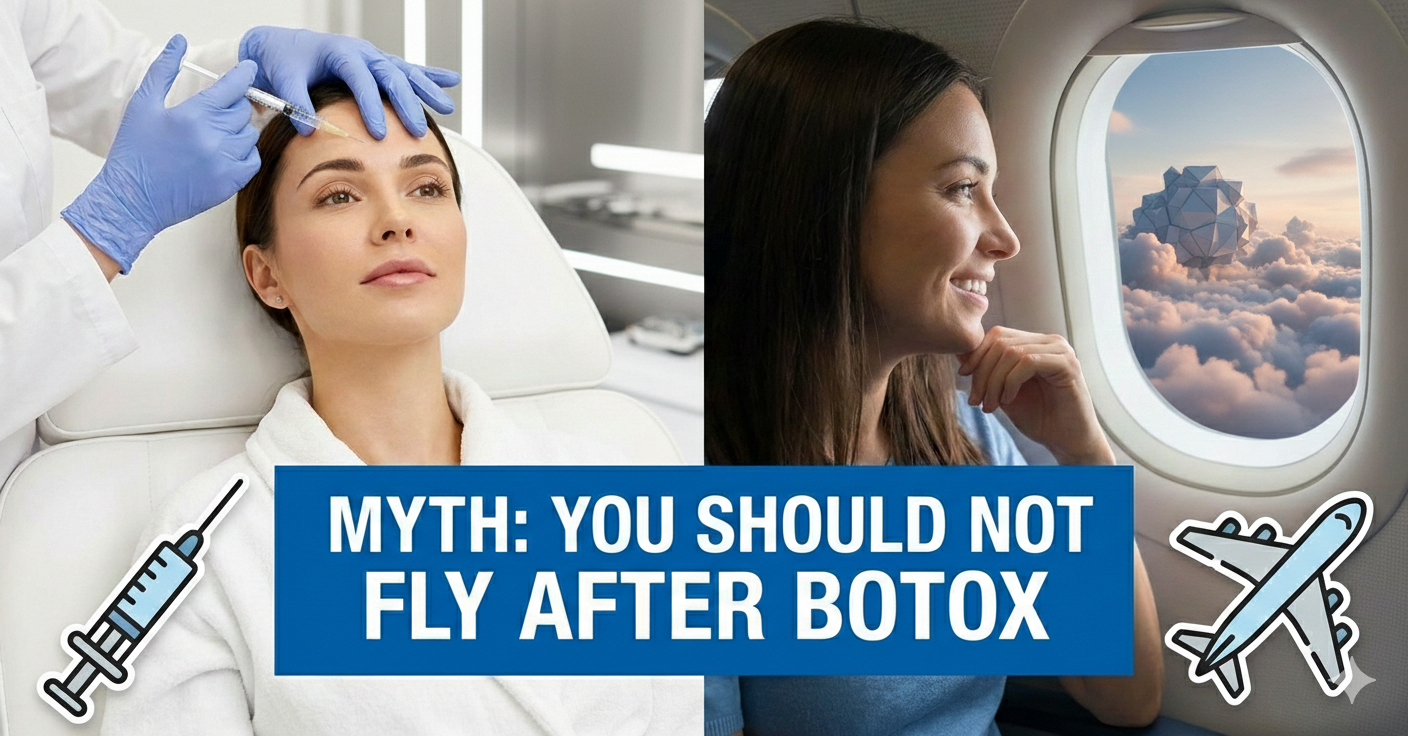
Myth: You Should Not Fly After Botox
This is one of the most common concerns patients ask before aesthetic treatments. Many people worry that flying soon after Botox can cause the toxin to spread, reduce results, or lead to complications. Let’s break this myth using science, logic, and real clinical experience.
Why This Myth Exists
The idea usually comes from fear of air pressure changes, gravity, or movement during travel. Since Botox is injected into the face, people assume flying might shift it to unwanted areas.
In reality, this concern is not supported by medical evidence.
How Botox Actually Works
Botulinum toxin works locally. Once injected into a muscle, it binds to nerve endings within a few hours. After binding, it stays exactly where it is placed.
Botox does not circulate freely in the bloodstream. It does not float around the face. It does not respond to altitude or cabin pressure.
This is basic neurobiology, not marketing language.
Does Cabin Pressure Affect Botox?
No.
Commercial aircraft cabins are pressurized to a level that is safe for the human body. These pressure changes do not affect medications already placed inside tissues.
If cabin pressure could move injected substances, we would see problems with fillers, insulin injections, vaccines, and local anesthetics. We do not.
Millions of people fly daily after medical injections without issues.
Does Gravity or Sitting in a Plane Move Botox?
Also no.
Botox does not drip, slide, or migrate due to gravity. Once injected into the muscle, it binds at the neuromuscular junction. Movement of Botox is related to injection technique and muscle anatomy, not posture or travel.
This is why proper placement by an experienced injector matters far more than whether you fly.
What Studies and Clinical Experience Show
There is no scientific evidence linking post Botox air travel to increased side effects or reduced effectiveness.
In real world practice, patients regularly fly the same day or next day after Botox, especially in cities like Dubai where medical tourism and frequent travel are common.
If flying caused problems, it would be well documented by now.
What Patients May Notice and Misinterpret
Some people notice mild swelling or bruising looks slightly worse after a long flight. This is due to fluid retention and prolonged sitting, not Botox migration.
This happens even without any injections.
The Botox result itself is unaffected.
What Actually Matters After Botox
Avoid rubbing or massaging the treated area for 24 hours
Remain upright for about 4 hours after treatment
Avoid intense exercise, saunas, or steam the same day
Follow proper aftercare instructions given by your dermatologist
These recommendations are based on muscle activity and tissue healing, not flying.
The Bottom Line
Flying the next day after Botox is safe.
There is no scientific or biological mechanism by which air travel can move Botox or make it dangerous. This myth persists due to misunderstanding of how Botox works, not because of real risk.
At Cutiscity, we believe in separating facts from fear so patients can make confident, informed decisions about their skin and treatments.